

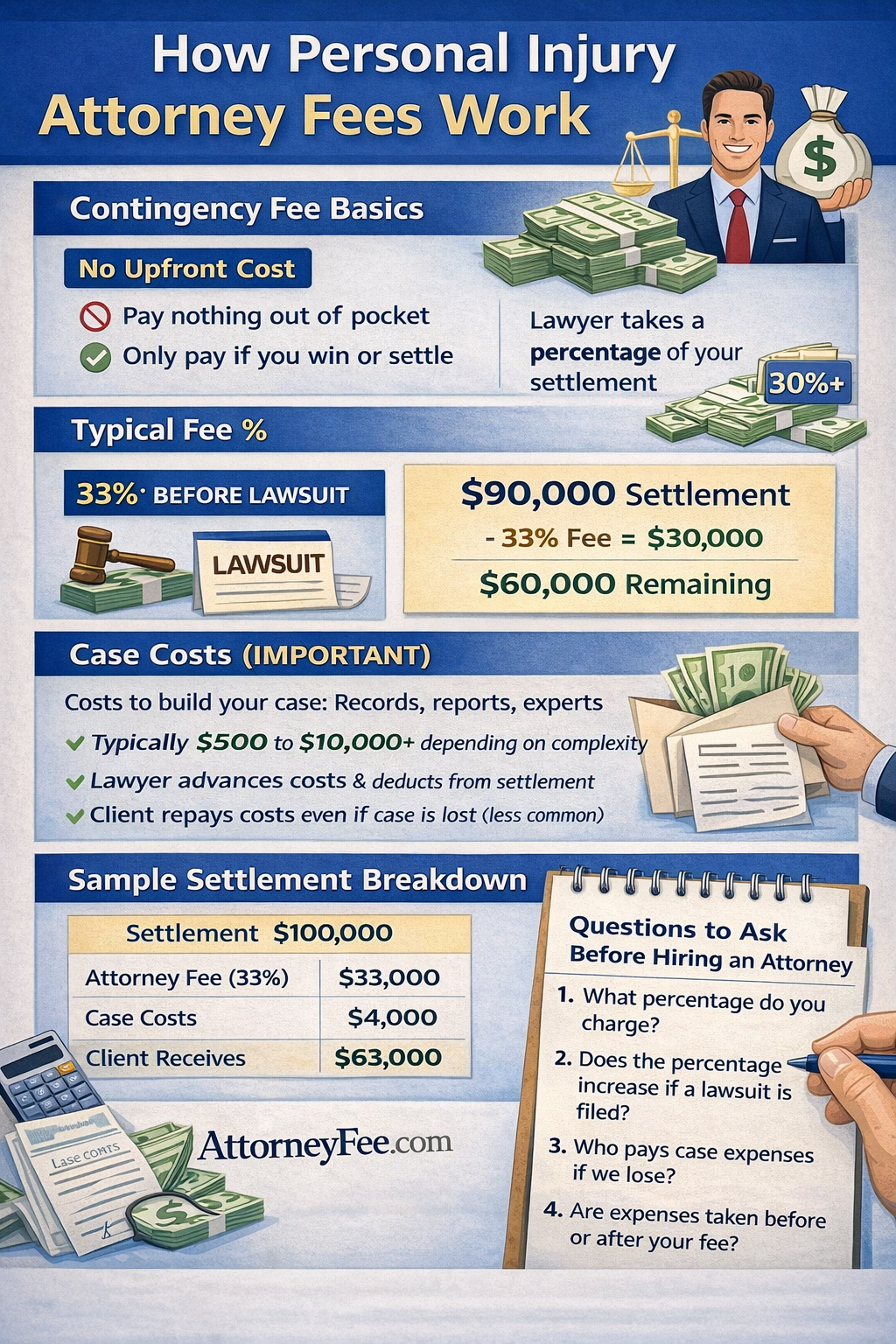
What a Contingency Fee Means
You pay nothing upfront.
The attorney only gets paid if they win or settle your case.
Instead of billing hourly, the lawyer takes a percentage of the money recovered for you.
Typical Fee Percentage
Most personal injury attorneys charge:
- 33⅓% (one-third) if the case settles before a lawsuit
- 35%–40% if a lawsuit is filed or goes to trial
So if your settlement is $90,000:
- 33% fee = about $30,000 to the attorney
- You receive the remaining amount (minus case costs — explained below)
Case Costs (This Is Important)
Attorney fees and case expenses are different.
Expenses are the money spent to build your case:
- Medical records
- Police reports
- Expert witnesses
- Court filing fees
- Depositions
- Accident reconstruction
These usually range from $500 to $10,000+ depending on complexity.
Who pays those?
It depends on the firm’s contract:
Two common models
- Lawyer advances the costs and subtracts them from the settlement (most common)
- Client reimburses costs even if the case loses (less common — always ask!)
Example Settlement Breakdown
Settlement: $100,000
| Item | Amount |
|---|---|
| Attorney Fee (33%) | $33,000 |
| Case Costs | $4,000 |
| Client Receives | $63,000 |
What Happens If You Lose?
Usually:
- You owe no attorney fee
- You may owe case costs depending on the agreement
This is why reading the retainer agreement matters.
Why Lawyers Use This System
It allows injured people to hire a lawyer without needing money upfront.
The attorney is also motivated to maximize your settlement — they only get paid if you do.
Questions You Should Always Ask Before Hiring
- What percentage do you charge?
- Does the percentage increase if a lawsuit is filed?
- Who pays case expenses if we lose?
- Are expenses taken before or after your fee?