

For many individuals and families facing mounting debt, the idea of filing for personal bankruptcy can feel overwhelming. However, depending on your financial situation and broader economic conditions, this year may actually present a strategic opportunity to reset your finances and regain control of your future.
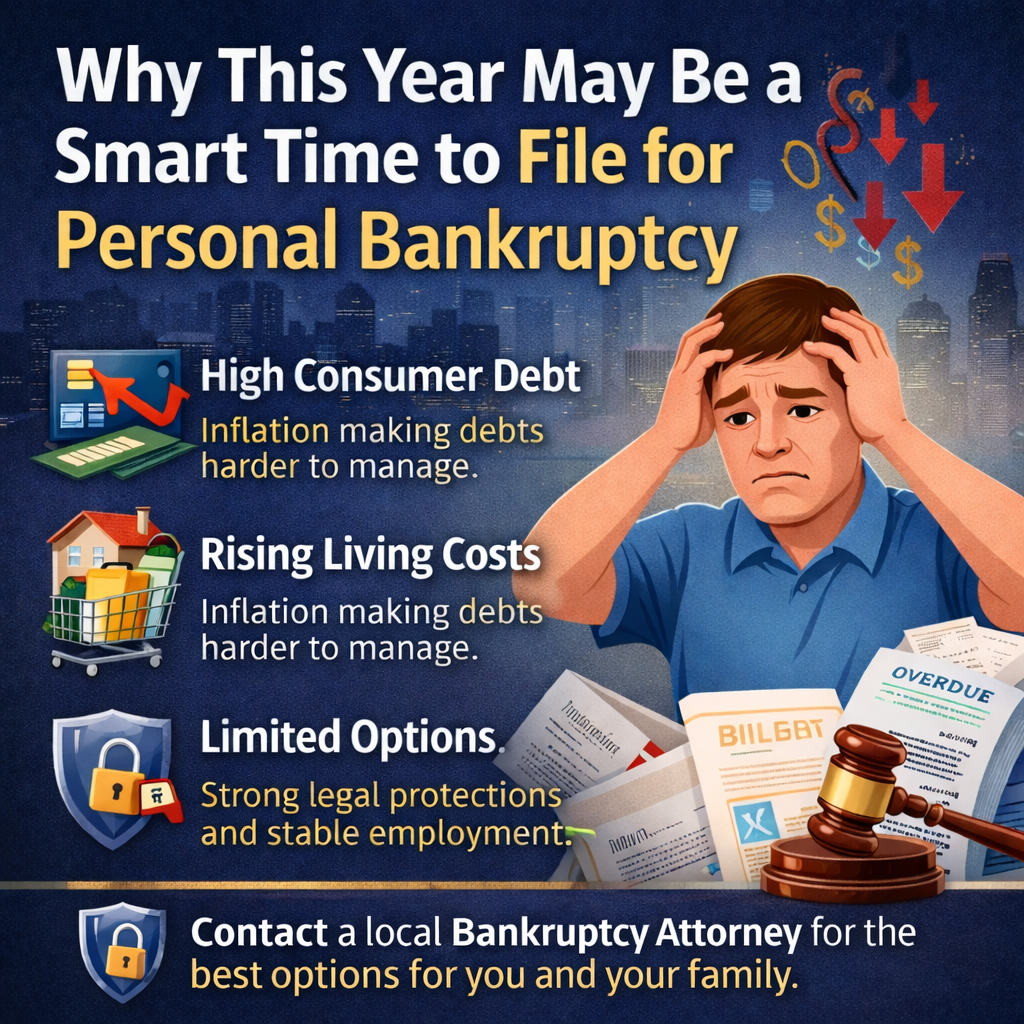
One of the primary reasons this year could be an ideal time to file is the continued pressure of high consumer debt. Credit card balances, personal loans, and medical bills have risen significantly in recent years. With interest rates remaining elevated, carrying large balances has become more expensive than ever. Filing for bankruptcy can immediately stop collection efforts, reduce or eliminate unsecured debts, and give you a structured path toward financial recovery.
Another important factor is inflation and the rising cost of living. Many households are finding it increasingly difficult to keep up with everyday expenses such as housing, groceries, and utilities. When income doesn’t keep pace with these rising costs, debt often fills the gap. Bankruptcy can provide relief by discharging qualifying debts, allowing individuals to redirect their income toward essential living expenses instead of interest payments.
Additionally, bankruptcy laws continue to offer strong consumer protections. Filing triggers an automatic stay, which immediately halts creditor harassment, wage garnishments, foreclosure proceedings, and repossessions. For someone under constant financial stress, this protection alone can be life-changing. It creates breathing room to assess your situation and move forward without the pressure of aggressive collection actions.
This year may also be advantageous due to relatively stable employment conditions in many sectors. While economic uncertainty still exists, many individuals are currently employed or have access to income streams that can support a successful bankruptcy plan—especially under Chapter 13, which involves structured repayment. Filing while you have income can help you retain assets and create a manageable repayment strategy.
Another overlooked benefit is the ability to rebuild credit sooner rather than later. While bankruptcy does impact your credit score, continuing to miss payments, accumulate late fees, and carry high balances can be even more damaging over time. Filing now allows you to begin the credit rebuilding process immediately. Many individuals start receiving credit offers within a year or two after discharge, provided they manage their finances responsibly.
It’s also worth noting that delaying bankruptcy can sometimes make your situation worse. As debts grow and interest compounds, the financial hole becomes deeper and harder to escape. Filing sooner can limit long-term damage and preserve more of your income and assets.
Of course, bankruptcy is not a one-size-fits-all solution. It’s critical to evaluate your specific financial circumstances, the types of debt you carry, and your long-term goals. Consulting with a qualified bankruptcy attorney can help determine whether Chapter 7 or Chapter 13 is appropriate for your situation.
In conclusion, while filing for bankruptcy is a significant decision, this year may offer a unique window of opportunity for those struggling with debt. With rising costs, high interest rates, and strong legal protections in place, taking action now could be the first step toward financial stability and a fresh start.